Reviewing The Funny One SVG for Real Embroidery
As a designer who has spent more hours than I care to count hunched over an embroidery machine, tweaking tension and swapping needles, I have learned that not every digital file translates well to thread. We live in an era where Crafts and Graphics intersect constantly, and while it is easy to download a vector and call it a day, the real test happens when the needle hits the fabric. Recently, I pulled The Funny One SVG from my asset library to evaluate its potential for actual production work. This was not just a cursory glance; I wanted to see if this design could hold up under the scrutiny of a paying customer and the mechanical demands of a multi-needle machine.
First Impressions and Visual Personality
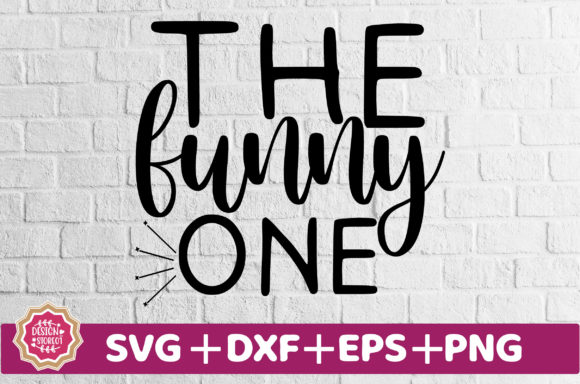
When I first opened the zip file, I was looking for clean lines and logical layering. The Funny One SVG arrives with a distinct personality. It is not merely a generic clipart element; it has a mood. The layout suggests a playful, lighthearted theme that immediately brings to mind custom apparel or personalized gifts. For an embroidery designer, the initial visual check is about balance. Does the design feel top-heavy? Are there isolated elements that might wander during stitching? In this case, the composition feels grounded. The shapes are bold enough to read clearly from a distance, which is crucial for items like tote bags or sweatshirts where the viewer is not standing inches away.
The inclusion of high-resolution PNG files with transparent backgrounds alongside the vector formats (SVG, EPS, DXF) is a practical touch. It means I can quickly drop the image into a printable mockup to show a client how it might look on a dark navy hoodie versus a cream-colored canvas tote before I even thread the machine. This speed is essential for small shop owners and Etsy sellers who need to maintain a steady flow of listings without getting bogged down in excessive pre-production visualization.
Real-World Application: From Concept to Stitch
To truly test The Funny One SVG, I imagined a specific scenario: a batch of custom embroidered patches for a local boutique’s summer collection. Patches are unforgiving. They require precise digitizing because the edges must be crisp, and the fill must be dense enough to cover the backing but not so dense that it turns the fabric into cardboard. While this product is sold as a graphic asset, its vector nature allows for conversion into a machine embroidery design, provided you have the right software and skills.
I also considered its use on a baby item, such as a onesie or a burp cloth. Here, the "funny" aspect of the design shines. Parents love whimsical, unique details that stand out from mass-produced retail goods. However, this application requires caution. If the design includes tiny lettering or intricate corners, those details might get lost in the pile of terry cloth or fail to stitch out cleanly on stretchy knit fabrics. The key is to assess the stitch density. If you are converting this SVG into an embroidery file, you must ensure that the satin stitch widths are appropriate for the scale. A wide satin stitch on a small baby garment can look bulky and uncomfortable against sensitive skin.
Navigating Fabric and Hoop Constraints
One of the most critical aspects of using any new design asset is understanding where it fails. The Funny One SVG performs best when given space to breathe. On curved surfaces like caps or hats, the design needs to be centered perfectly to avoid distortion. If the graphic has long, horizontal elements, they may warp around the crown of a cap. I would recommend testing this design on a flat surface first, such as a pillow cover or a kitchen towel, to gauge how the threads interact with the weave.
Textured fabrics present another challenge. If you are stitching onto a waffle-knit towel or a heavy canvas tote bag, the texture can swallow fine details. The transparency of the PNG file helps here, allowing you to overlay the design on photos of your actual fabric stock to check contrast. For dark fabrics, you must consider thread colors carefully. A design that looks vibrant on white might disappear on black if the color palette is not adjusted. This is where the vector files shine; you can recolor the elements instantly to test high-contrast combinations before committing to thread.
Commercial Viability and Brand Consistency
For craft business owners and creative entrepreneurs, the value of a design lies in its versatility and legal clarity. The Funny One SVG fits well into the category of commercial embroidery projects, but due diligence is required. Before selling finished products or digital derivatives, you must confirm the licensing terms. Does the creator allow for unlimited sales of physical items? Is there a restriction on using the raw vector files for resale? These questions are vital for maintaining professionalism and avoiding intellectual property disputes.
From a branding perspective, consistency is key. If your shop specializes in minimalist, modern aesthetics, a overly busy or cartoonish version of this design might clash. However, if your brand voice is playful and approachable, this asset could become a staple in your holiday embroidery lineup or your everyday custom apparel offerings. The ability to scale the vector without loss of quality means you can use the same core graphic for a large blanket design and a small embroidered patch, ensuring brand recognition across different product lines.
Practical Designer Notes for Best Results
Before you run a full production batch, follow these practical steps to ensure quality:
- Test on scrap fabric: Always stitch out a sample on the exact material you plan to use for the final product. Check for puckering, thread breaks, or registration issues.
- Check stabilizer compatibility: The right stabilizer can make or break the finish. For stretchy fabrics, use a cut-away stabilizer; for woven fabrics, a tear-away might suffice, but test both.
- Inspect small details: Zoom in on the vector file. Are there nodes that are too close together? These can cause the needle to jump or the thread to bunch up.
- Mockup in black and white: Remove color from the equation to check the structural integrity of the design. If it does not read well in grayscale, it may lack sufficient contrast in real life.
- Verify file formats: Ensure you have the correct file type for your workflow. The included SVG, EPS, and DXF files are excellent for cutting machines and vector editing, but remember that they are not native embroidery files. You will need to digitize them or convert them using specialized software.
In conclusion, The Funny One SVG is a versatile asset that offers genuine potential for handmade products and small shop merchandise. It is not just a static image; it is a starting point for creativity. Whether you are creating a personalized gift for a friend or stocking your Etsy store with unique tote bag designs, this graphic provides a solid foundation. Just remember that the transition from screen to stitch requires careful planning, thoughtful material selection, and a willingness to test and refine. When handled with professional care, this design can elevate your finished product from simple craft to cherished keepsake.